
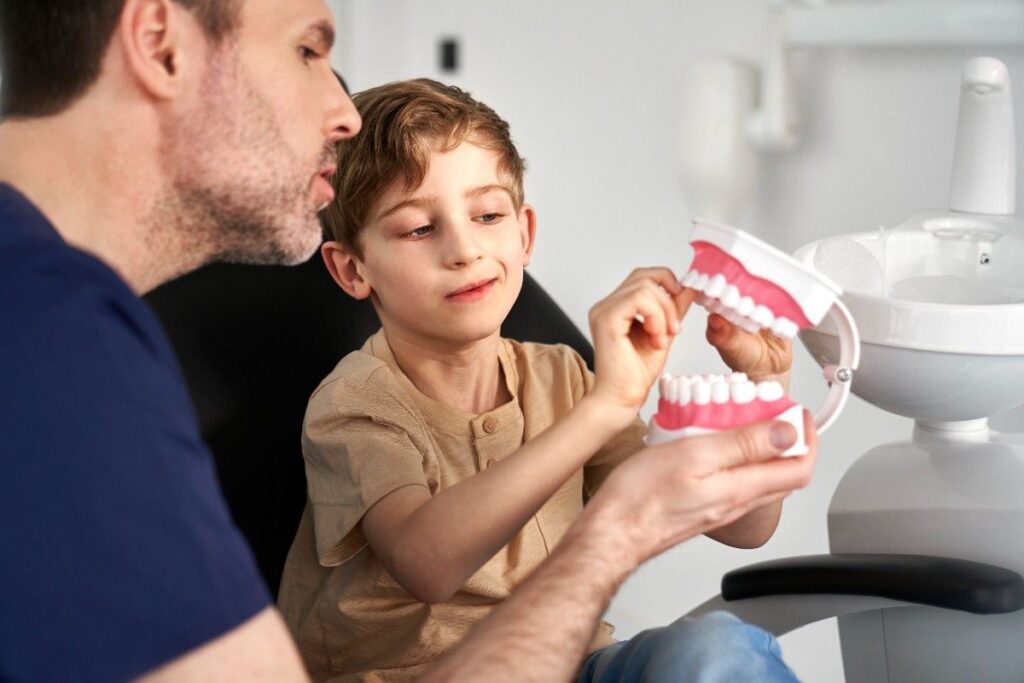
Kids braces Putnam, CT may be discussed when a child has crowded teeth, spacing, bite problems, early or late tooth loss, jaw growth concerns, rotated teeth, or adult teeth coming in unevenly. Parents in Putnam may benefit from an orthodontic evaluation because children’s teeth and jaws change as they grow. Some children need monitoring only, while others may need early orthodontic guidance, braces later, or treatment based on tooth eruption and bite development.
Parents often notice orthodontic concerns in small ways. Adult teeth may come in behind baby teeth. A child’s front teeth may overlap. The bite may look uneven, or the dentist may mention crowding during a checkup. In Putnam, CT, these moments can raise a practical question: is it time to talk about braces, or is it too early?
Kids braces Putnam, CT may be discussed after an orthodontic evaluation of tooth eruption, jaw growth, bite relationship, spacing, and oral habits. Not every child who has crooked teeth needs braces right away. Some children need monitoring while their mouth develops. Others may benefit from early treatment or a future braces plan. The best timing depends on the child’s growth, dental health, and specific orthodontic concerns.
Children’s Teeth Do Not Always Erupt in a Straight Line
Adult teeth may look crowded or uneven when they first erupt. Some teeth improve as the jaw grows, and more teeth come in, while others remain crowded or shift into poor positions.
Parents may see teeth overlapping, rotating, erupting behind baby teeth, or coming in higher than expected. Spacing may also appear, especially when baby teeth are still present.
An orthodontic evaluation helps determine whether the pattern is part of normal development, or a sign that treatment may be needed later.
Bite Problems Can Be Easier to See During Growth
A child’s bite can show signs of overbite, underbite, crossbite, open bite, or uneven jaw relationship. These concerns may affect chewing, speech, tooth wear, or jaw development in some cases.
Some bite problems are easier to guide while a child is still growing. Others may be monitored until more permanent teeth erupt.
A braces consultation is not only about straight front teeth. It also looks at how upper and lower teeth fit together and how the jaws are developing.
Early Evaluation Does Not Always Mean Early Braces
Parents sometimes worry that an orthodontic evaluation means treatment will begin immediately. That is not always the case.
Some children only need observation. The orthodontist may recommend periodic checks as adult teeth come in. Monitoring can help identify the right time for treatment if it becomes necessary.
Kids braces Putnam, CT may be recommended later when enough permanent teeth have erupted or when the bite is ready for correction. Timing should be based on development, not pressure.
Crowding, Spacing, and Tooth Loss Timing
Crowding can happen when there is not enough space for adult teeth. Spacing may happen when teeth are small, missing, or still developing. Early or late loss of baby teeth can also affect how adult teeth come in.
If a baby tooth is lost too early, nearby teeth may drift into space. If a baby tooth stays too long, it may block or redirect an adult tooth.
Parents should mention unusual tooth loss timing, delayed eruption, or adult teeth coming in behind baby teeth. These details help guide the orthodontic evaluation.
How a Dental Check Supports Braces Readiness
Before braces begin, teeth and gum need to be healthy. Cavities, gum inflammation, poor brushing, or untreated dental pain can affect orthodontic timing.
A Dentist in Dayville, CT may check oral health, cleanings, X-rays when needed, and cavity risk before braces or orthodontic treatment. Children who struggle with brushing may need more home care support before brackets are placed.
Braces require careful cleaning. If oral hygiene is already difficult, the orthodontic team may work with parents on better habits before treatment begins.
What Parents May Notice at Home
Parents may notice signs that an orthodontic evaluation is worth discussing. These signs do not always mean braces are needed right away, but they can help guide timing.
Watch for:
- Crowded adult teeth
- Large gaps
- Teeth biting the cheek or roof of the mouth
- Top and bottom teeth not meeting well
- Mouth breathing habits
- Difficulty biting or chewing
- Thumb-sucking beyond early childhood
- Early or late baby tooth loss
- Jaw shifting when closing
- Teeth wearing unevenly
- A professional evaluation can explain which signs matter most.
How Putnam Families May Compare Orthodontic Options
Families may hear about braces, expanders, retainers, clear aligners, or other appliances and feel unsure about what applies to their child. The right option depends on age, growth, bite, and tooth position.
Some children may need braces only when most permanent teeth are in. Others may need early treatment to guide a bite issue. Some may not need treatment at all.
Nearby families asking about orthodontics in Dayville, CT may have similar concerns about timing, bite development, and braces options. The diagnosis determines the plan.
What Braces May Help Children With
Braces may help move teeth into better positions when suitable. They can address crowding, spacing, rotations, and bite concerns depending on the child’s case.
Braces may support:
- Straighter tooth alignment
- Improved bite contact
- Reduced overlap
- Better spacing
- Guided tooth positioning
- Easier cleaning after treatment
- Better long-term stability with retention
- Improved smile balance
- Treatment goals should be explained clearly before braces begin. Parents should understand what braces can help with and what limits may exist.
Daily Life with Kids Braces
Children with braces need to clean carefully around brackets and wires. Food can collect appliances, raise the risk of plaque buildup, white spots, and gum irritation.
Parents may need to help younger children check brushing. Flossing tools, interdental brushes, or other aids may be recommended. Certain hard, sticky, or chewy foods may need to be avoided to reduce broken brackets.
If a bracket loosens, wire pokes, or the child has unusual pain, parents should contact the orthodontic office for guidance.
The Parent’s Role During Treatment
Parents help braces treatment succeed by supporting appointments, home care, food choices, and retainer use after treatment. Children may need reminders until habits become routine.
Parents can also help children understand that braces are a process. Teeth move gradually, and adjustments may create pressure or soreness for short periods.
During a consultation at Green Valley Orthodontics, parents can ask about timing, treatment steps, brushing support, and what signs to watch during care.
What to Expect at a Child Braces Consultation
The visit may begin with parent concerns and the child’s dental history. The orthodontic team may ask about tooth eruption, habits, past dental treatment, and any bite or chewing concerns.
The evaluation may include teeth, bite, jaw growth, facial balance, and spacing. Photos, X-rays, or digital scans may be recommended to understand tooth positions and development.
Parents should leave with clear guidance. The child may need braces soon, early treatment, monitoring, or no treatment at that time.
Local Parent Review
“We were unsure if our child’s crowded teeth were normal or a sign brace were coming. The consultation helped explain what needed monitoring and when treatment might make sense.”
Guidance Before Braces Become a Decision
A child’s orthodontic plan should match growth, tooth development, bite needs, and oral health. Parents in Putnam, CT can visit Green Valley Orthodontics to discuss whether braces, monitoring, or another orthodontic step may be right for their child.
Frequently Asked Questions
When are kids braces Putnam, CT usually discussed?
Braces may be discussed when a child has crowding, spacing, bite problems, rotated teeth, jaw growth concerns, or adult teeth erupting unevenly.
Does an orthodontic evaluation mean my child needs braces now?
No, some children only need monitoring. Treatment timing depends on growth, tooth eruption, bite development, and oral health.
What age should children be checked for braces?
Children may be evaluated when adult teeth begin erupting or when a dentist or parent notices crowding, bite concerns, or jaw growth issues.
Can braces help with bite problems?
Yes, braces may help select bite problems depending on the child’s growth and diagnosis. Some bite concerns may need early guidance.
Do cavities need treatment before braces?
Yes, cavities and gum concerns should usually be treated before braces begin. Healthy teeth and gums support orthodontic care.
How can parents help children clean braces?
Parents can check brushing, support flossing, limit sticky foods, and follow the orthodontic team’s home care instructions.
Will my child need a retainer after braces?
Yes, retainers are commonly recommended after braces to help hold teeth in their new positions. Retainer wear is part of long-term care.
What if my child has a loose bracket?
Contact the orthodontic office for guidance. Avoid pulling on wires or brackets and follow instructions to prevent irritation.